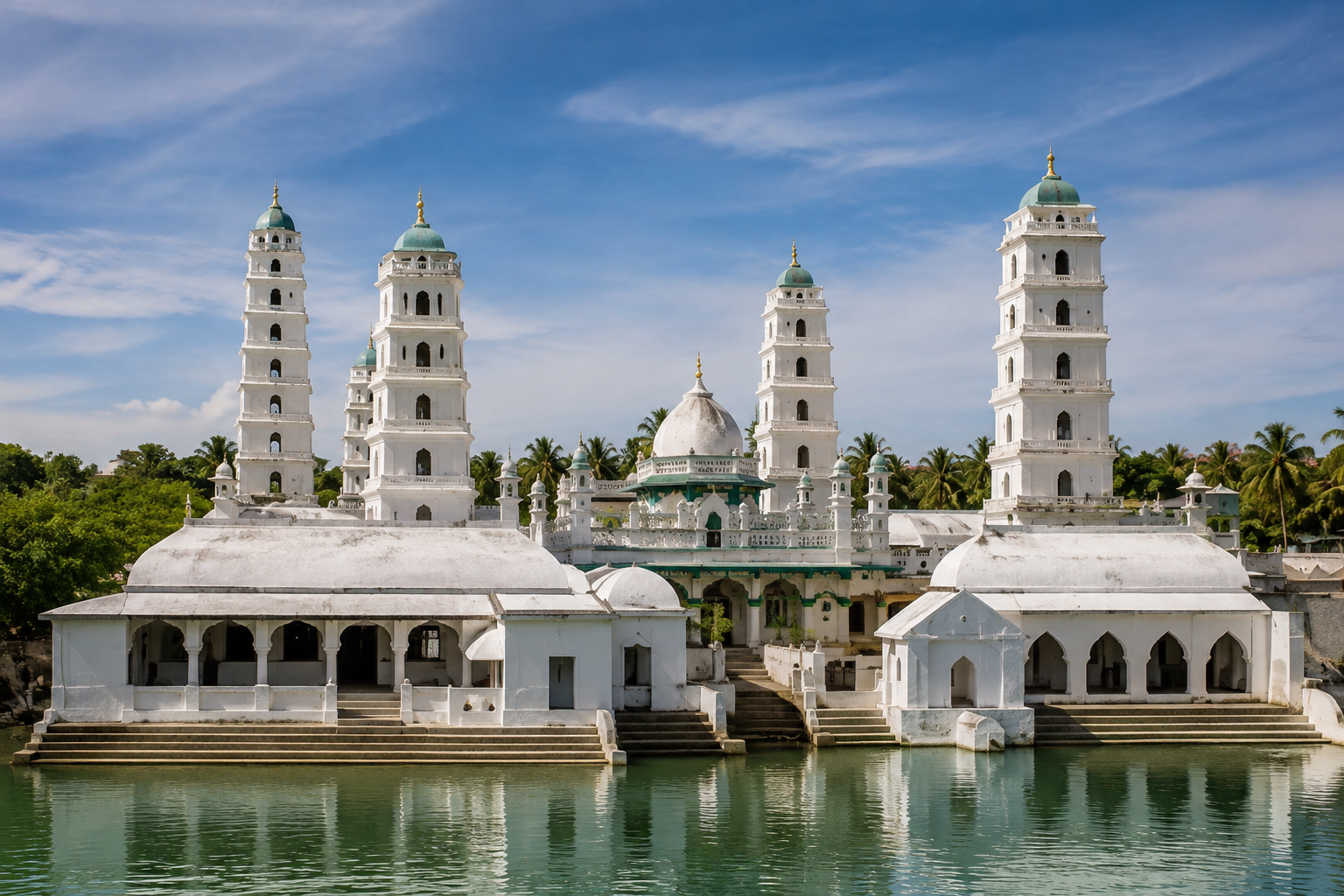
Nagore Dargah
A Historic Heritage Landmark of Faith, Tradition & Harmony
The Nagore Dargah stands over the tomb of the revered Sufi saint Hazrath Syed Abdul Qadir Sahul Hameed Badusha Nayagam (Ra) and remains one of Nagore’s most significant historic and cultural landmarks.
Nagore Dargah Holy Shrines Opening Times
Nagore Dargah is open every day for pilgrims to offer prayers, visit and stay. The Holy Shrines are open for viewing and prayers only during the shrine opening times shown above.
The Main Entrance (Alangara Entrance) remains open 24 hours a day, 7 days a week. For security reasons, the other three main entrances are closed nightly from 11:00 PM to 04:00 AM.
Pilgrims are kindly requested to plan their journey according to the Holy Shrine opening times and the available access routes.
A Legacy Rooted in Nagore
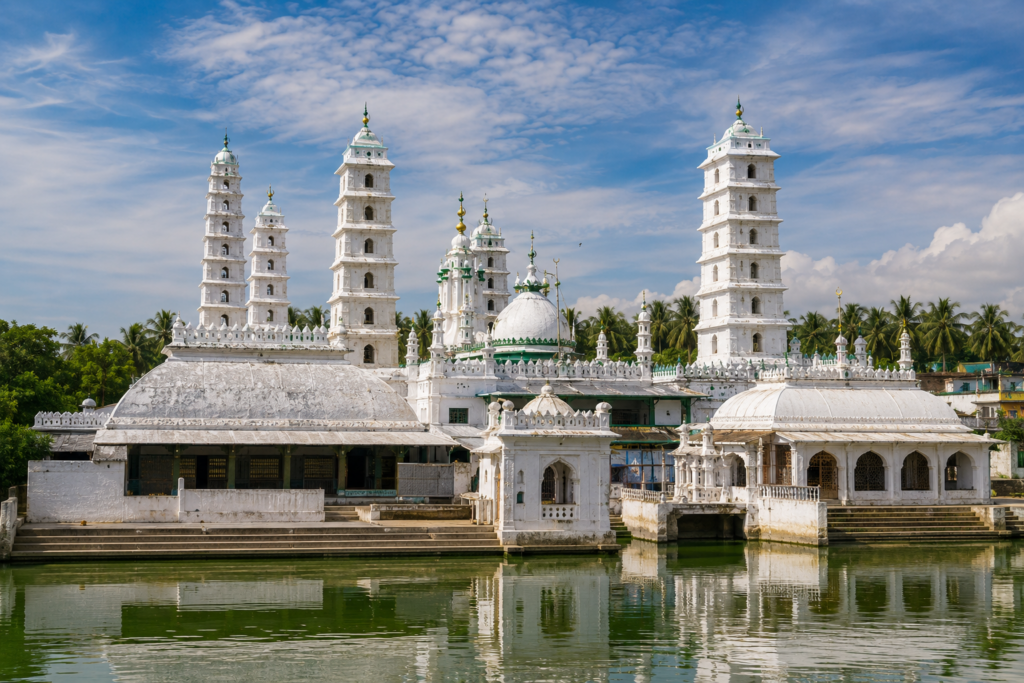
Nagore Dargah stands over the tomb of Hazrath Syed Abdul Qadir Sahul Hameed Badusha Nayagam (Ra), affectionately known as Nagore Andavar. His enduring legacy remains deeply connected with the history, traditions and heritage of Nagore.
Born
10 Rabi’ al-Awwal
910 AH
Corresponding to 21 August
1504 AD
Passed Away
10 Jumada al-Akhirah
978 AH
Corresponding to 9 November
1570 AD
Hazrath Syed Abdul Qadir Sahul Hameed Badusha Nayagam (Ra)
Hazrath Syed Abdul Qadir Sahul Hameed Badusha Nayagam (Ra) (1490–1579 CE) is remembered as a revered Sufi saint whose legacy has become an integral part of Nagore’s history.
According to local tradition, he was associated with numerous miracles and is believed to have cured the physical affliction of King Achutappa Nayak, the 16th-century ruler of Thanjavur. Because of his enduring legacy and the devotion surrounding his memory, he is popularly known as Nagore Andavar, meaning “the revered one of Nagore.”
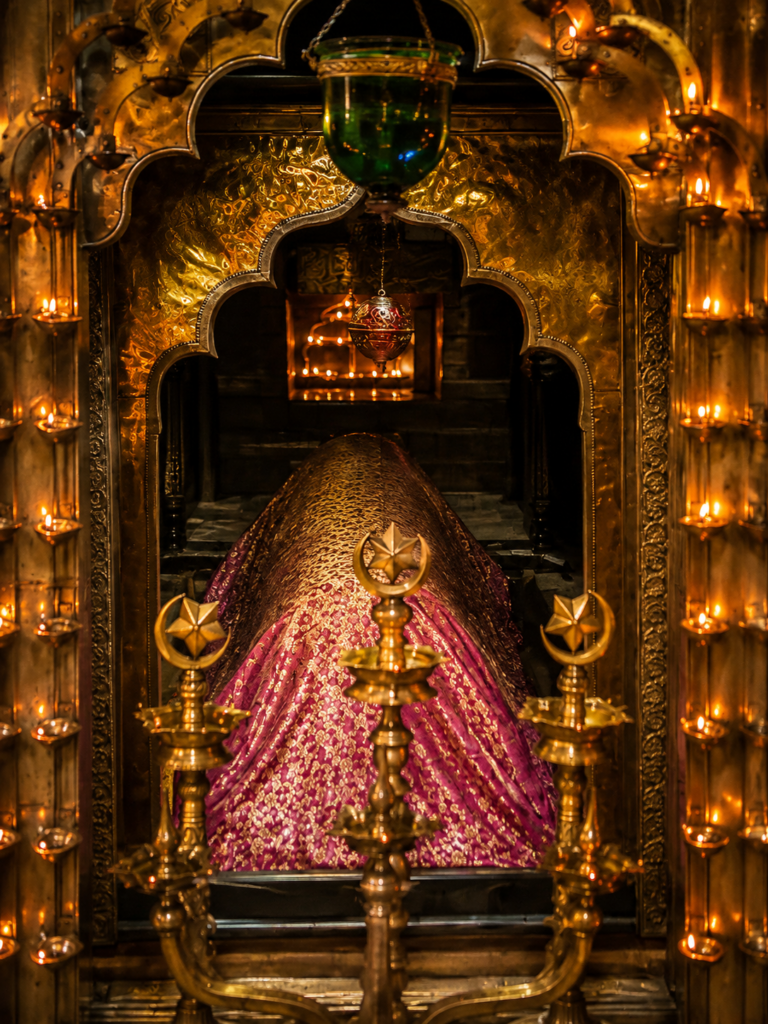
The Five Minarets of Nagore Dargah
The Dargah is distinguished by its five historic minarets, with The five historic minarets distinguish the Dargah, and tradition associates the tallest with Maratha ruler Pratap Singh of Thanjavur (1739–1763 CE).. Together, they form an enduring part of Nagore’s architectural and cultural heritage.
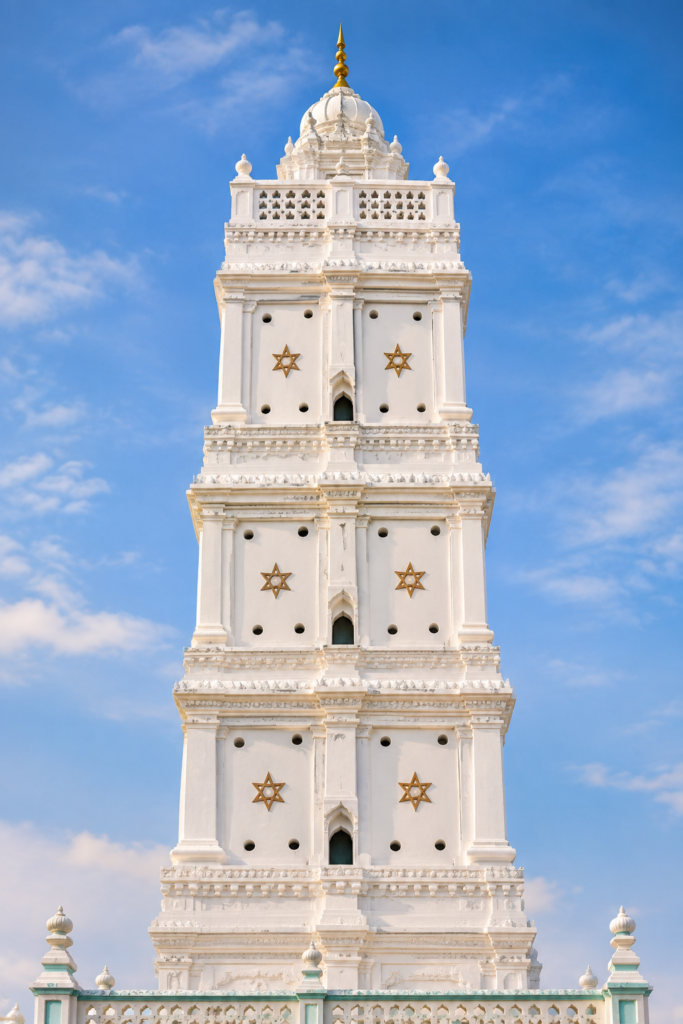
Sahib Minara
1645 – 77 ft
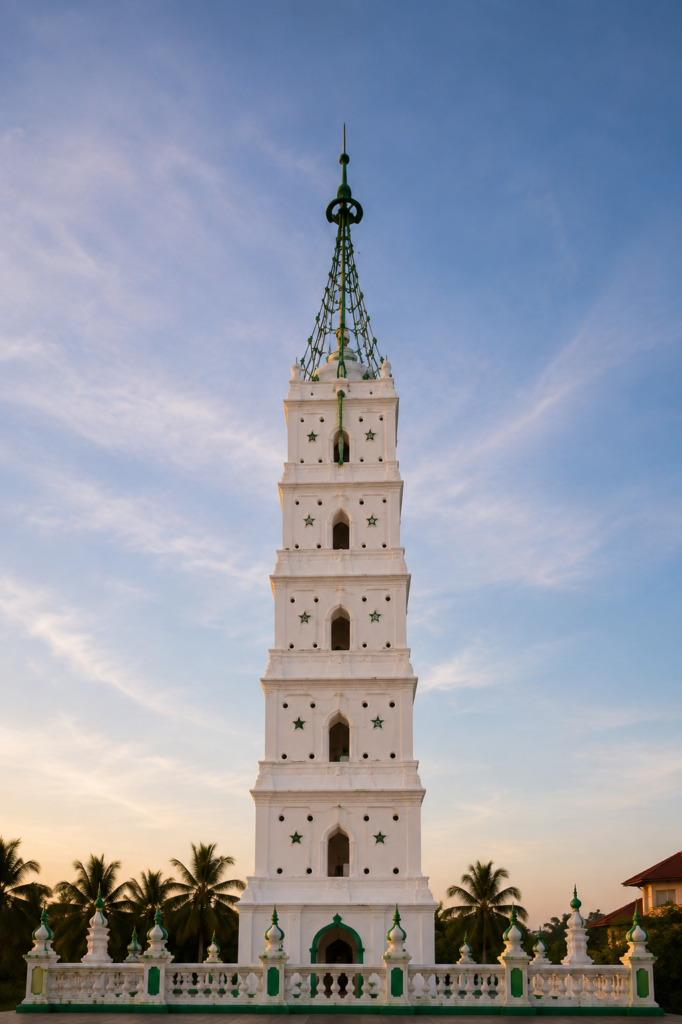
Thalaimattu Minara
1688 – 93.5 ft
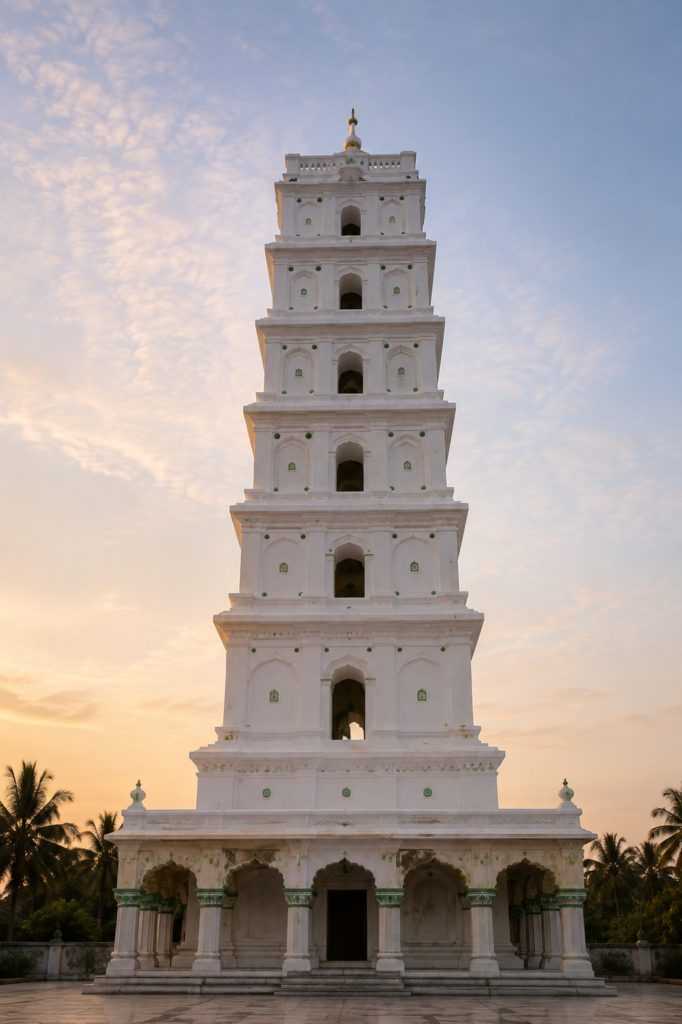
Muthubak Minara
1698 – 93.25 ft
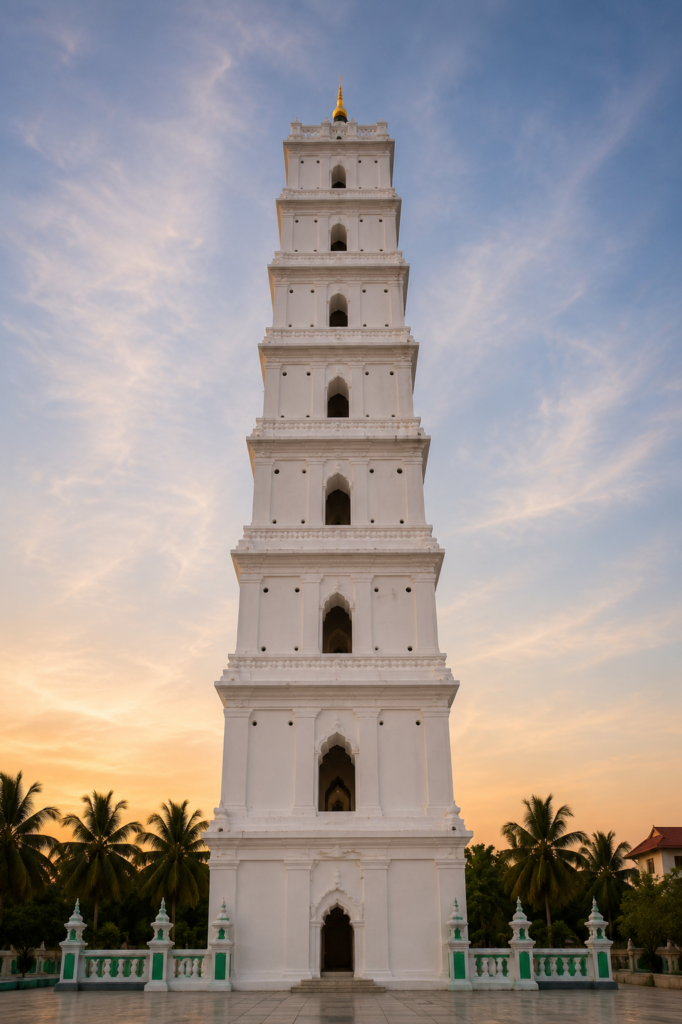
Ottu Minara
1724 – 80 ft
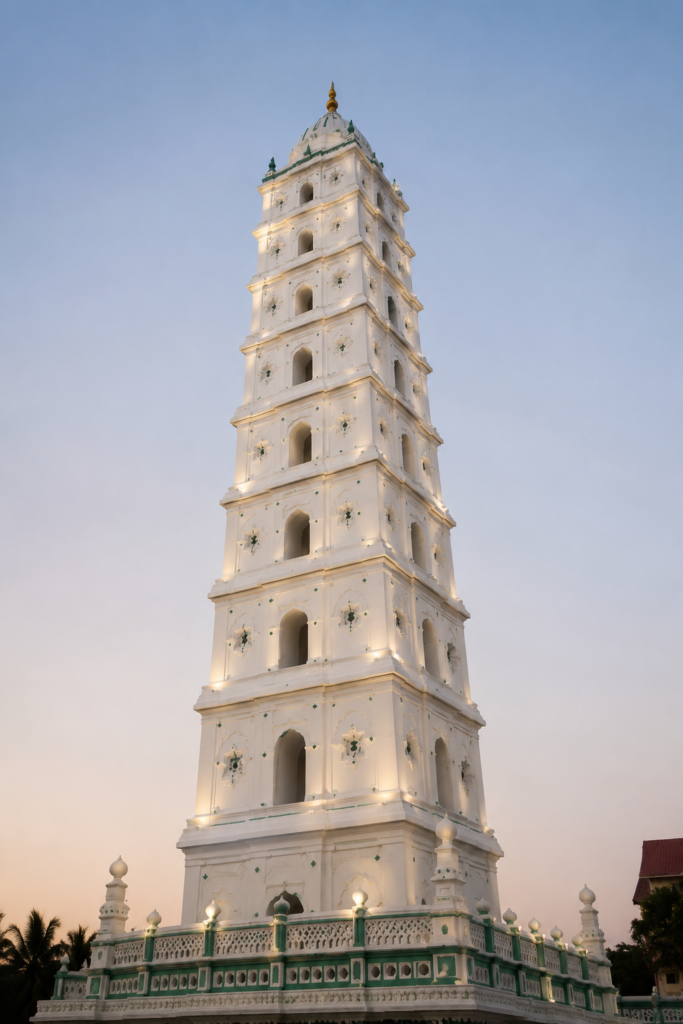
Periya Minara
1763 – 131 ft
A Place of Heritage & Harmony
Nagore has long been associated with a spirit of cultural harmony, where people from different communities have shared a connection with its heritage. The Dargah and the town continue to reflect a tradition of peaceful coexistence, respect and shared cultural values.
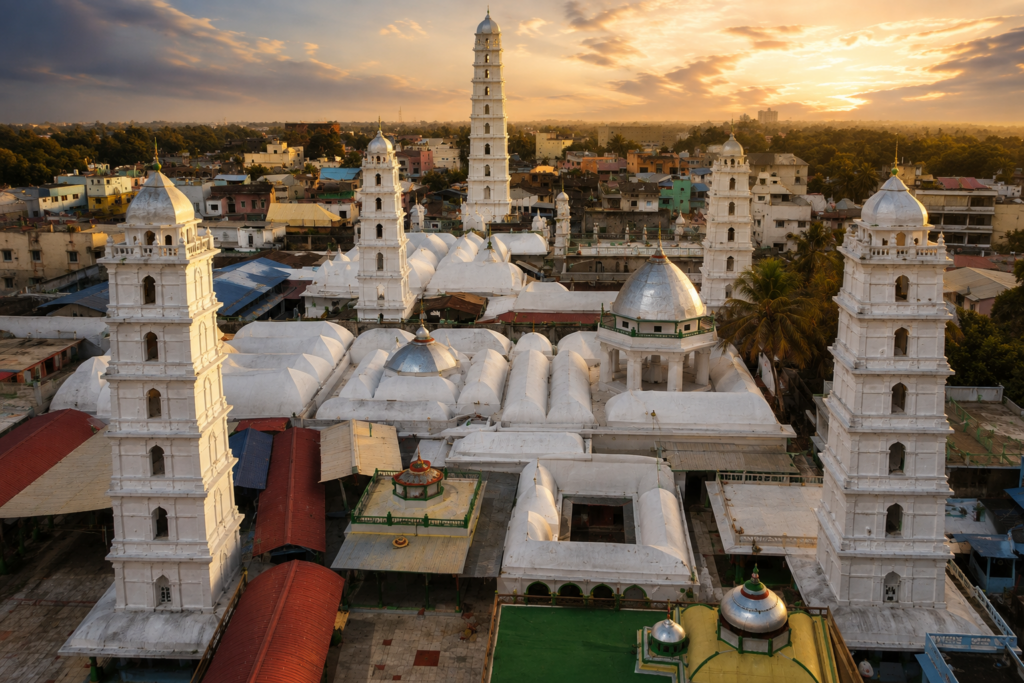
A Heritage Built Through Devotion
Devoted followers of Hazrath Syed Abdul Qadir Sahul Hameed Badusha Nayagam (Ra) developed the Dargah, with significant contributions from Hindu devotees.
Holy Saint Life History
Holy Fest Start History
Holy Flag History
Holy Golden Blanket History
Holy Tanjore Palace Blanket History
Holy Festival History
A Living Heritage
Nagore Dargah remains a living heritage of Nagore, carrying forward generations of tradition, architecture and shared cultural values. Its enduring presence continues to inspire peace, compassion, harmony and respect among all who visit.
How to Reach
By Road
Nagore is well connected by road with major towns and cities in Tamil Nadu. Buses, taxis and private vehicles are available from nearby destinations.
By Rail
Nagore Railway Station provides rail connectivity to nearby towns and cities (Chennai, Kerala and Mumbai). Local transport is available to reach the Dargah.
By Air
Tiruchirappalli International Airport is the nearest major airport. Visitors can continue their journey to Nagore by road or rail.
By Local Transport
Auto-rickshaws, taxis and local transport are readily available within Nagore for convenient travel to the Dargah from Bus stand and Railway Station.